Obon
Festival of Souls
Welcoming the spirits of loved ones back home with lanterns and dance
The feeling at the heart
Connection
The Story
Do you ever think about people you love who are no longer here? Do you ever wish you could tell them something, or just be near them again for a little while?
That wish is at the heart of Obon. It is a time when families believe the ones they love can find their way home.
The story of Obon begins with a monk named Maudgalyayana — one of the Buddha’s closest students. Maudgalyayana had developed extraordinary gifts through years of meditation, and one day he used those gifts to look into other realms. He wanted to see his mother, who had died.
What he found broke his heart. His mother was suffering. She was hungry, and everything she tried to eat turned to fire.
He went to the Buddha and asked: what can I do?
The Buddha told him to make offerings — food and care given with an open, generous heart — to the community of monks. The love and goodness in that act could reach his mother. It could free her.
Maudgalyayana did exactly that. And it worked. His mother was released, and Maudgalyayana was so flooded with joy that he began to dance.
That dance of gratitude — the dance of someone who knows their loved one is at peace — is still remembered today.
How people celebrate today:
Obon is celebrated in Japan in August, and in Japanese communities around the world. It lasts for three days, and the feeling is not sad — it is warm. It is a reunion.
The first thing families do is light lanterns. Fires are lit at the gate of the home to guide the spirits home. The lights are welcoming. This way, they say. We’re here.
Families visit graves to clean them carefully and leave fresh flowers and favorite foods.
Every evening, people gather for Bon Odori — the Obon dance. Dancers form circles, moving through the same simple steps together. Paper lanterns hang overhead, glowing amber and gold. The sound of taiko drums beats steady and full. Flutes and singing weave through the warm night air.
Children dance alongside grandparents. Visitors are welcomed in. You don’t have to know the steps perfectly — you just step in and follow along.
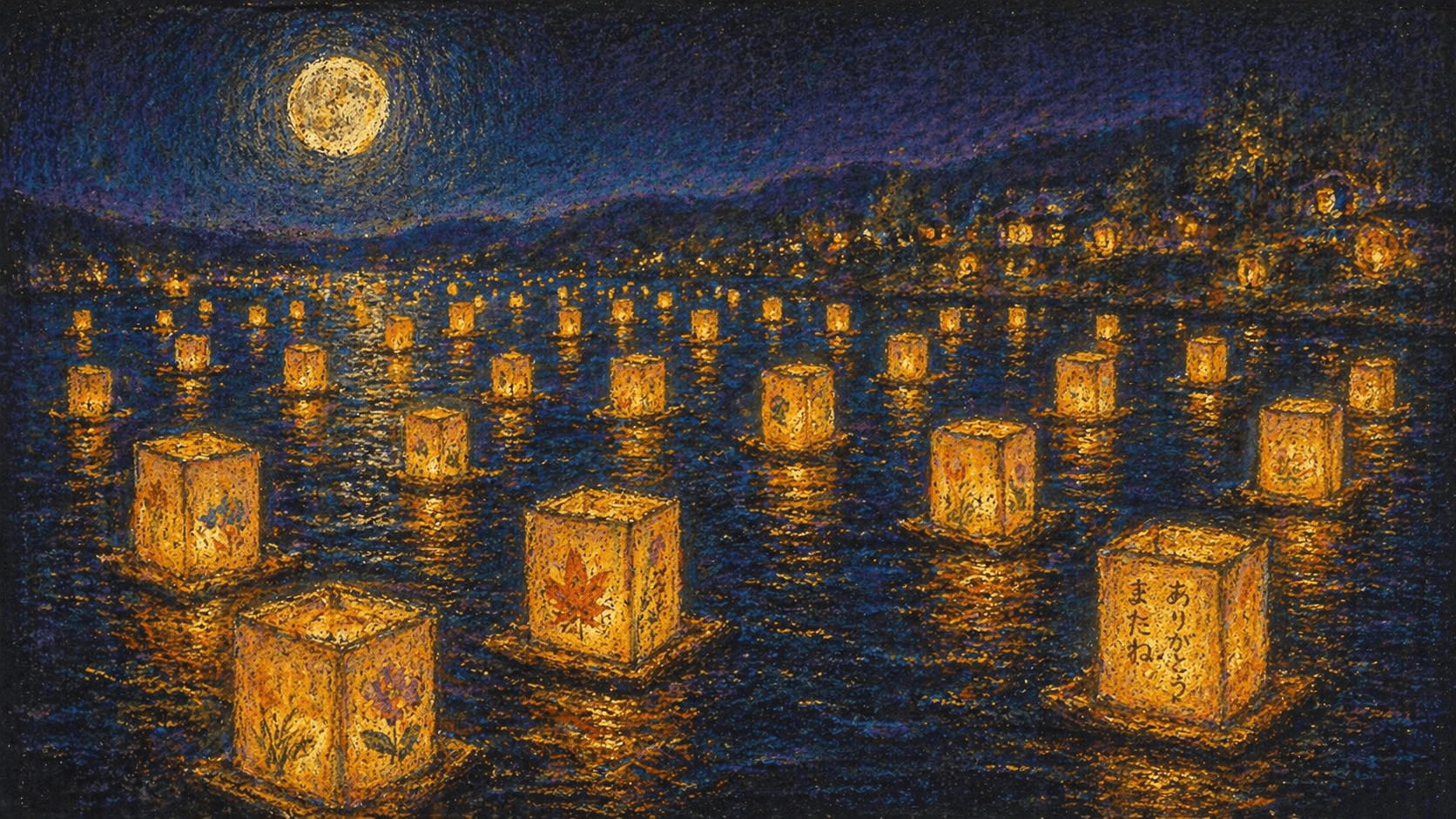
On the last evening, small paper lanterns are lit and set on rivers, lakes, or the sea. They drift out slowly, carrying light into the dark water. They are a gentle goodbye — not a sad one. The kind you give someone you love when you know you will see them again.
Because that is what Obon holds: not grief, but the belief that love does not end. That the ones we miss are still connected to us. And that once a year, for just a few days, we can welcome them home.
You might see
A greeting to know
Happy Obon
OH-bohn
“Happy Obon”