Yom Kippur
The Day of Atonement
The most sacred day of the year — a day for saying sorry and meaning it
The feeling at the heart
Forgiveness
The Story
Have you ever done something that hurt someone, and then carried that feeling around with you — in your stomach, in your chest — wishing you could go back and undo it? That heavy feeling has a name, even if you haven’t heard it before. And there is something remarkable about it: it means you care.
There is a day set aside, once a year, just for that feeling. A day to put down the weight. A day to say I’m sorry — and mean it, and be heard.
It is the most sacred day of the Jewish year.
The story of this day goes back to Moses, and to a moment when everything almost fell apart. Moses had climbed a mountain called Sinai to receive the Torah. He was up there for forty days. And while he was gone, the people waiting below grew frightened and restless. They made a golden calf and began to worship it, turning away from everything they had promised.
When Moses came down and saw what had happened, he was heartbroken. He broke the stone tablets he had been carrying. The people had made a terrible mistake.
But then came the hard, necessary work. There was sorrow. There was honesty. There was the long, uncertain hope that they could be forgiven and begin again. Moses went back up the mountain. And on the tenth day of the seventh month — the day that would become Yom Kippur — forgiveness came.
How people celebrate today:
Yom Kippur means “Day of Atonement.” Atone means to make something right — to face what you’ve done and try to repair it.
The day before Yom Kippur, families eat a big meal together, because for the next twenty-five hours, adults will fast — they will not eat or drink anything at all. The whole day is given over to the work of the heart.
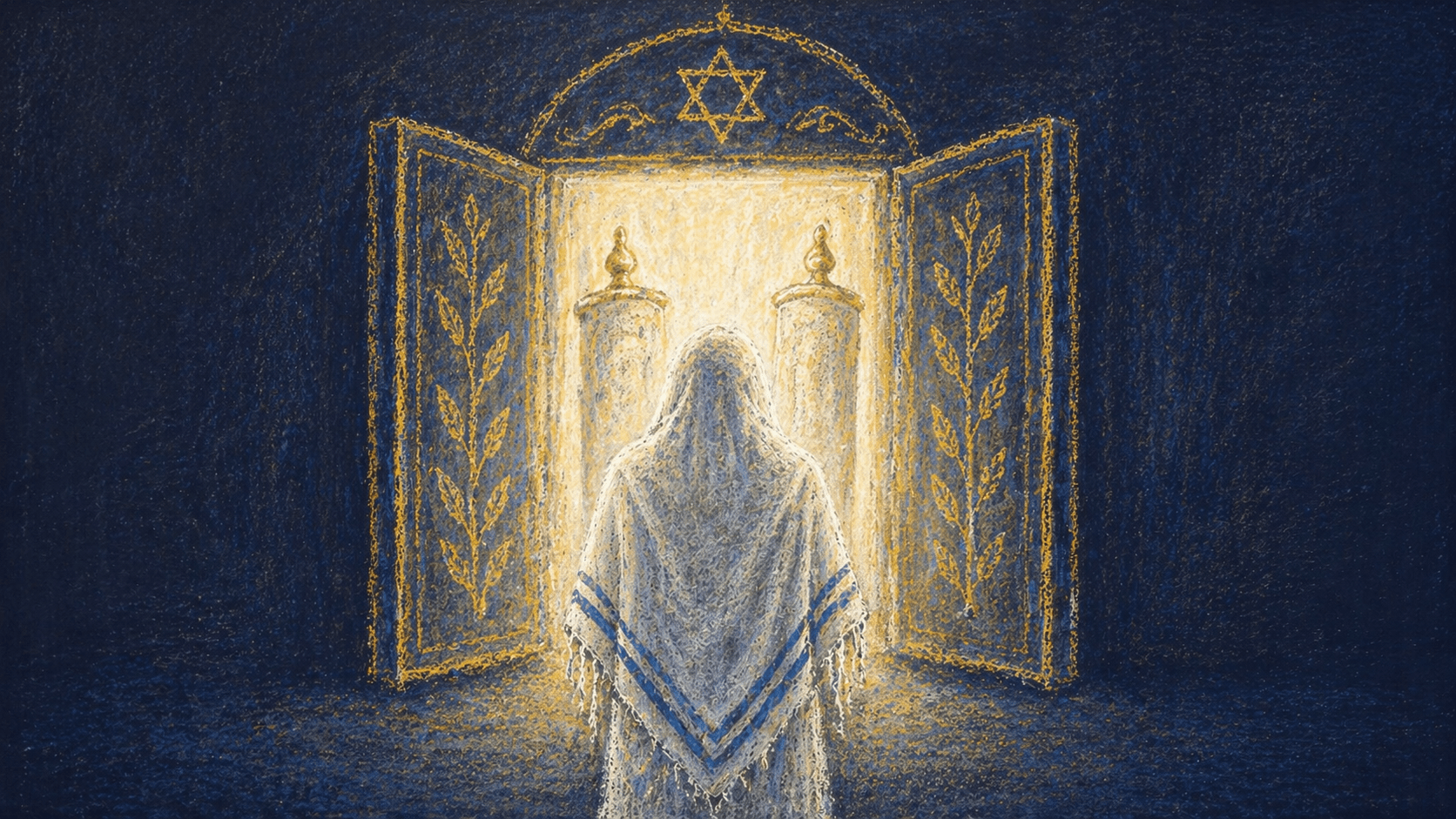
People spend much of the day in synagogue, praying together. One of the most important prayers is called Kol Nidre, sung at the very start of the evening. The melody is low and aching and beautiful. Even people who don’t understand all the words feel something when they hear it. It sounds like honesty. It sounds like reaching out.
Throughout the day, there are prayers where everyone says together the ways that people — all people, the whole community — have fallen short. Not just you, but we. It is a reminder that no one carries these things alone.
As the sun goes down and the day ends, the shofar is blown one long, final time. It tears through the quiet like something breaking open. And then — it is done. Something has been set down. Something has been made lighter.
Families go home and break the fast together. There is food and warmth and relief.
Yom Kippur asks the hardest and most important question: Is there someone you need to say sorry to? It gives you a whole sacred day — and a whole community beside you — to find the answer.
You might see
A greeting to know
G’mar Chatimah Tovah
g’MAR kha-tee-MAH toe-VAH
“May you be sealed in the Book of Life”