Ramadan
The Holy Month of Fasting
A whole month of fasting, prayer, and growing closer to what matters most
The feeling at the heart
Discipline
The Story
Have you ever decided to do something hard — really hard — on purpose? Not because someone made you, but because you wanted to show yourself, and God, that you could?
Once, in the year 610, in a desert city called Mecca, a man named Muhammad climbed alone to a cave in the mountains. He went there to think, to pray, to be quiet in a world that was very loud. One night, in the darkness of that cave, something extraordinary happened. The angel Jibreel — Gabriel — came to him with words from God. Sacred words. Words so important that Muhammad trembled. He rushed home to his wife Khadijah, shaking, and she wrapped him in a cloak and held him and told him he was good, and that whatever had happened, God would not abandon him.
Those words became the Quran — the holy book at the heart of Islam. And the night they first arrived was during a special month called Ramadan.
That is why, every year, for one whole month, Muslims around the world do something remarkable. They fast. From the first light of dawn until the sun sets each evening, they do not eat. They do not drink. Not even water. And they do it willingly, joyfully, as a way of remembering what matters most.
How people celebrate today:
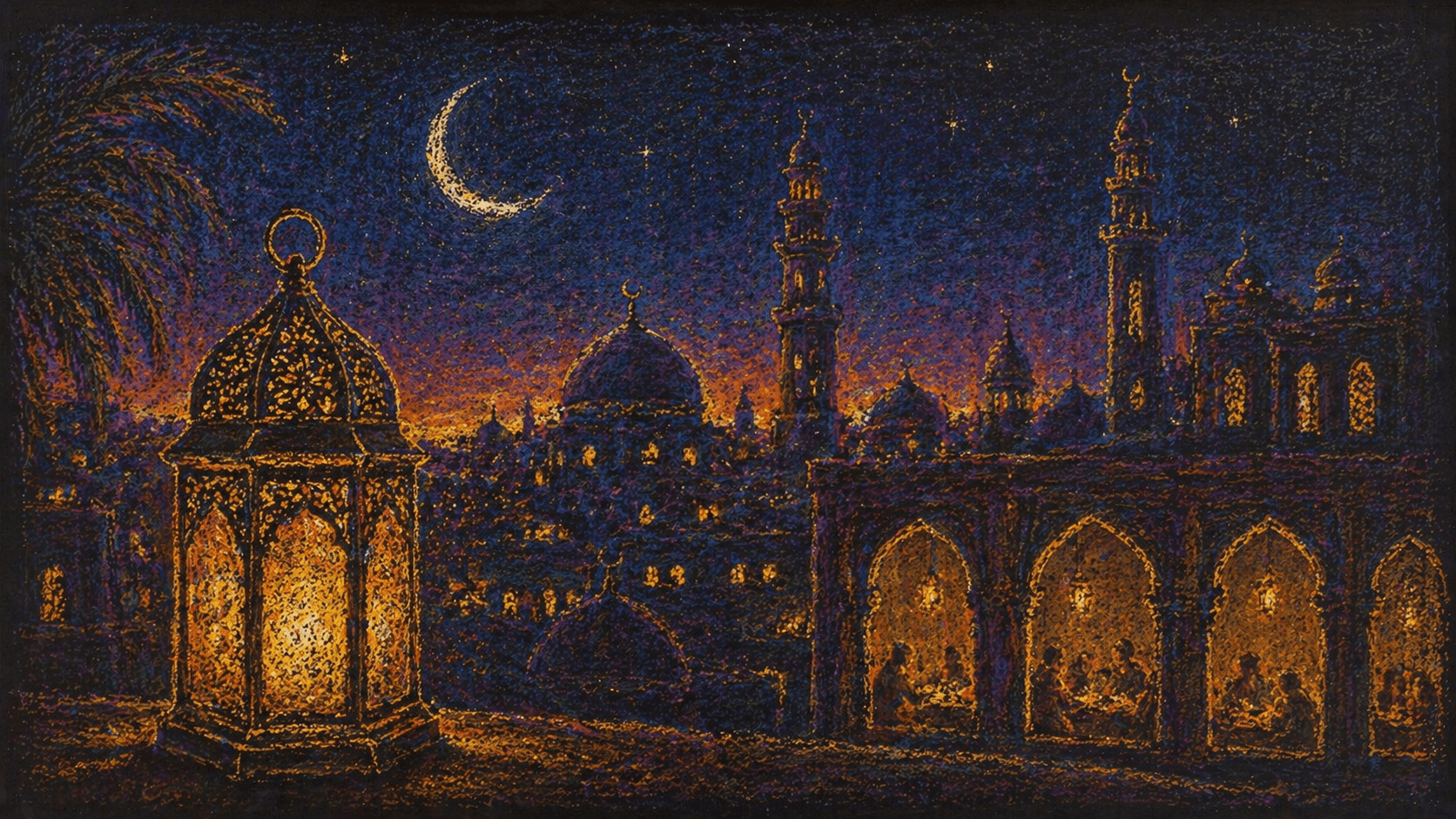
Ramadan begins when the crescent moon appears in the sky. Families wake before sunrise for a meal called suhoor — maybe warm bread, eggs, dates, and sweet tea, eaten quietly while the rest of the world sleeps. Then the fast begins.
All day long, the hunger is there. But the hunger is the point. It reminds you what it feels like to go without. It makes you think of people who are hungry not by choice. It makes you grateful.
When the sun finally dips below the horizon, it is time to break the fast — iftar. In homes and mosques and courtyards all over the world, families sit together and reach for a date first, just as Muhammad did, then water, then a beautiful spread of food. Soup, stews, rice, flatbreads, fried pastries, sticky-sweet desserts. The table is full. The room is full.
At night, mosques glow with light. Long prayers called Taraweeh fill the evening. The Quran is read aloud, slowly, over the whole month, so that by the end, every word has been spoken and heard.
The last ten nights of Ramadan are the most sacred of all. Somewhere hidden among them is a night called Laylat al-Qadr — the Night of Power — the very night the first words came to Muhammad in that cave. No one knows exactly which night it is, so people pray and stay awake and watch, hoping to catch it.
When the month ends, there is joy — a deep, earned joy, the kind that comes from doing something hard and true all the way to the finish.
You might see
A greeting to know
Ramadan Mubarak
rah-mah-DAHN moo-BAH-rak
“Blessed Ramadan”