Losar
Tibetan New Year
Sweeping away the old year and welcoming the new one with a clean heart
The feeling at the heart
Fresh Start
The Story
Have you ever felt like you needed a fresh start? Like you wanted to wash away everything that felt heavy or old, and begin again, clean and new?
That feeling is at the heart of Losar — the Tibetan New Year. And it begins, of all places, with sweeping.
High in the mountains of Tibet, people lived close to the land and close to the sky. Over centuries, they built a celebration around a simple but powerful idea: before something new can come in, you have to make room for it.
And so, in the days before the new year arrives, families do something that might surprise you. They clean. Really, truly, deeply clean. Every corner. Every shelf. Every forgotten dusty spot behind the door. They believe that dirt and clutter can hold onto old troubles — sadness, arguments, bad luck — and that sweeping them out makes space for something better.
They also make a special dish called guthuk — a thick, hearty soup with dumplings. But these aren’t ordinary dumplings. Each one hides something inside: a piece of charcoal, or wool, or a dried pea. Whatever you find in your dumpling is a playful message about your personality. Everyone laughs together.
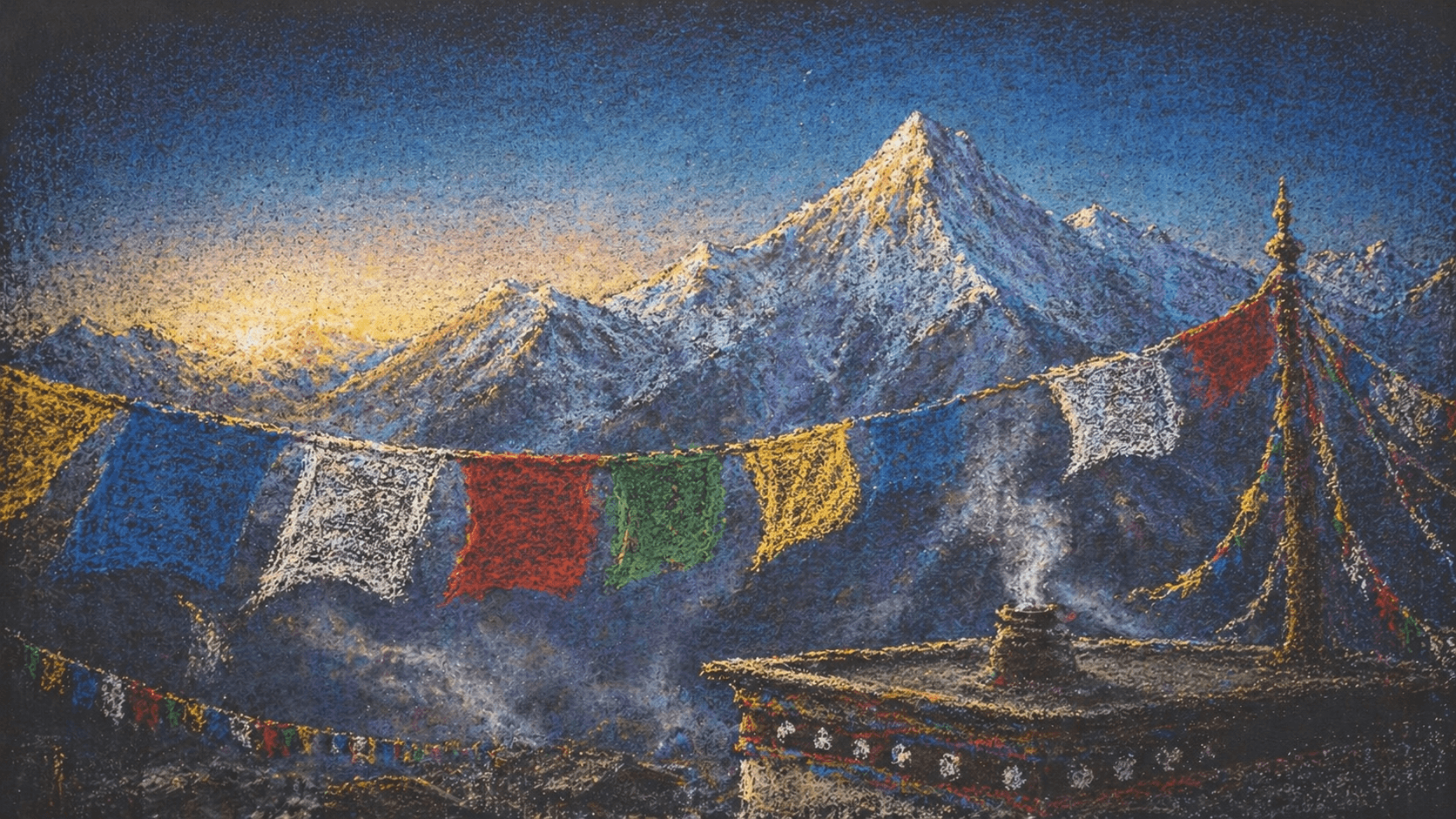
When the new year actually arrives, families rise early — very early, before the sun comes up. They climb to high places and light juniper branches. Juniper makes a thick, fragrant smoke that curls up into the cold mountain air. They call out prayers and blessings into the sky.
How people celebrate today:
Losar is celebrated across Tibet, Nepal, Bhutan, and in Tibetan communities all around the world. The celebration lasts for fifteen days, though the first three are the most special.
Homes are decorated with a colorful display called Chema Chemang — a wooden box filled with roasted barley, wheat, and colorful butter sculptures shaped like flowers or animals.
Families visit one another and greet each other with the words Tashi Delek, which means something like “good luck and blessings to you.” Children especially love this part, because visits often come with sweets and treats.
People wear their finest traditional clothes — rich reds and blues and golds. There is dancing, and music, and the sound of long horns called dungchen that make a deep, rumbling call you can feel in your chest.
Butter lamps flicker in temples and on windowsills. Monks create elaborate sand paintings, grain by grain, as an offering. Colorful prayer flags snap in the mountain wind, sending blessings out into the world with every flutter.
At the center of it all is that same feeling: the chance to let go of what was hard, and welcome what might be wonderful. To sweep out the old and step — with hope — into the new.
You might see
A greeting to know
Tashi Delek
TAH-shee DEH-lek
“Blessings and good luck”