Lohri
The Bonfire Festival
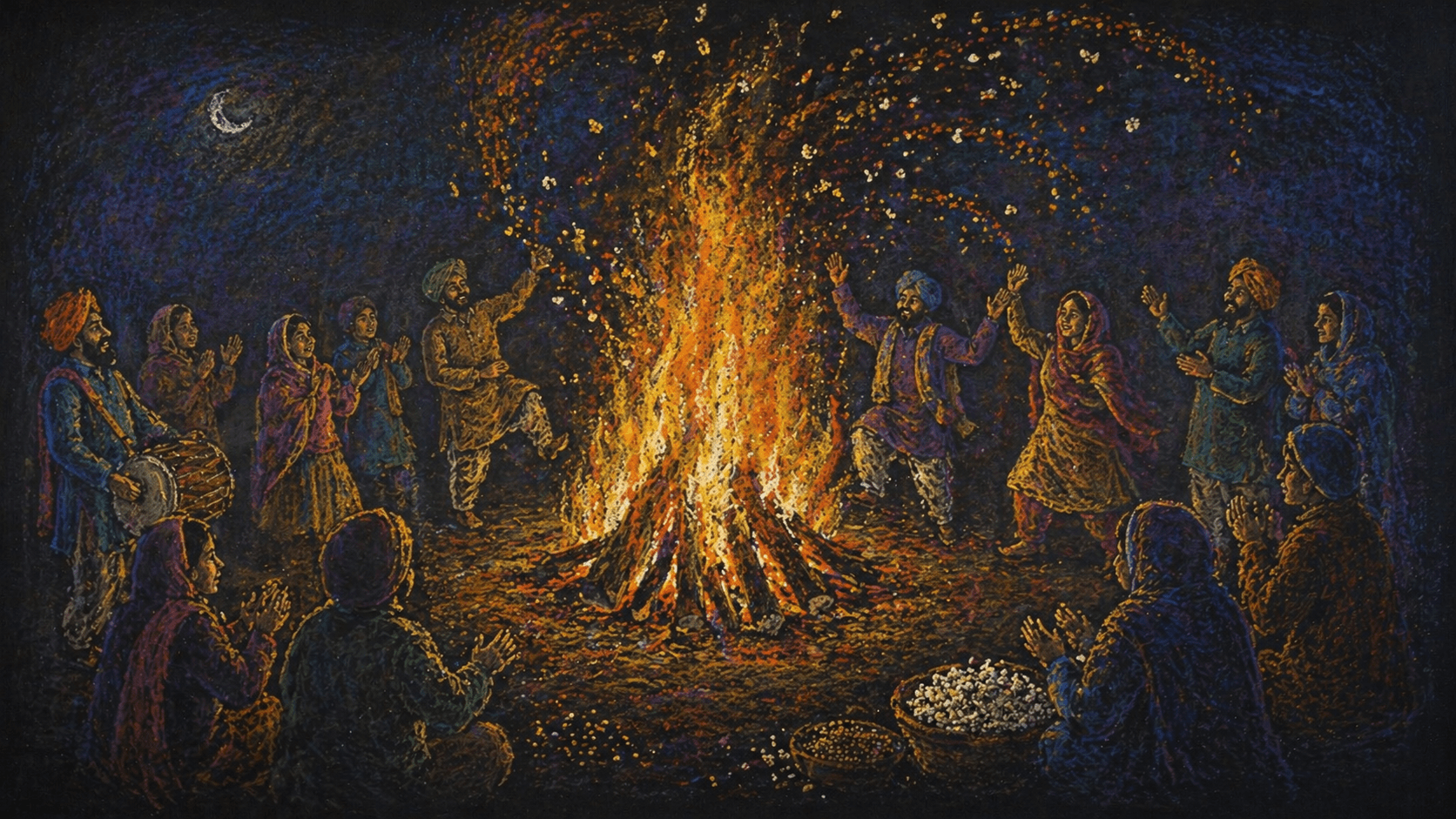
Dancing around a great bonfire on the coldest, darkest night of winter
The feeling at the heart
Warmth
The Story
Have you ever stood near a bonfire and felt the heat push against your face while the night was cold all around you? That feeling — the warmth in the cold, the light in the dark — is the very heart of Lohri.
Lohri comes in January, right in the thick of winter. The nights are long and cold, especially in the Punjab region of northern India, where this celebration began. And Lohri marks a turning point — the moment when the earth begins, slowly and quietly, to tilt back toward the sun. The coldest days are behind us. Warmth is on its way.
But you don’t just wait for the warmth. You make some yourself.
The story people tell on Lohri is about a man named Dulla Bhatti. He lived hundreds of years ago. Dulla Bhatti was known as a rebel — someone who refused to accept things that were unjust. He stole from the rich to give to the poor. He was daring and fierce and kind all at once.
In those days, some young women were being taken from their villages. Dulla Bhatti heard about this, and he couldn’t stand by. He found those women, brought them home, and made sure they were safe. People loved him for it. They sang songs about him around fires in the long winter nights. And they still do.
How people celebrate today:
On the night of Lohri, as soon as the sun goes down, the fire is lit. Families and neighbors gather around it — the bigger the fire, the better. The flames jump and crackle and send sparks spiraling up into the dark sky.
People toss offerings into the fire: sesame seeds, puffed rice, popcorn, peanuts, and rewri — crunchy little sesame candies that taste sweet and nutty. As each handful goes into the flames, people call out blessings.
The smell of woodsmoke mixes with the smell of roasted peanuts. Children race around the fire, their faces flushed and bright.
Then comes the dancing. Bhangra — energetic, joyful, with big leaping movements and shouts. And gidda for the women and girls — songs clapped and sung in circles, full of stories and laughter.
Special foods are shared: makki di roti, which is cornbread cooked on a griddle, served with sarson da saag, a thick green dish made from mustard greens. It is warm and hearty and exactly right for a winter night.
Lohri is especially celebrated when there is a new baby in the family, or a new bride — a new beginning of any kind. Because that is what Lohri is: a reminder that no cold lasts forever. That warmth always comes back. And that while you wait, you can make your own light.
You might see
A greeting to know
Happy Lohri
LOH-ree
“Happy Lohri”