Eid al-Adha
Festival of Sacrifice
Remembering a father’s willingness to give up what he loved most
The feeling at the heart
Devotion
The Story
Did you ever love something so much you couldn’t imagine giving it up? And did you ever wonder — what would you do if God asked you to?
Long ago, there was a man named Ibrahim who heard the voice of God in his heart. Ibrahim had waited his whole long life for a son. His name was Ismail. He loved him more than words.
Then one night, Ibrahim had a dream. In the dream, God asked him to give up the thing he loved most. Ibrahim wept. He did not want to. But he trusted God completely. And so, with a heart full of grief and faith both at once, he prepared to obey.
Ismail, who was old enough to understand, said: “Father, do what God has asked. I am not afraid.”
They walked together to the place. And just as Ibrahim raised his hand — God stopped him.
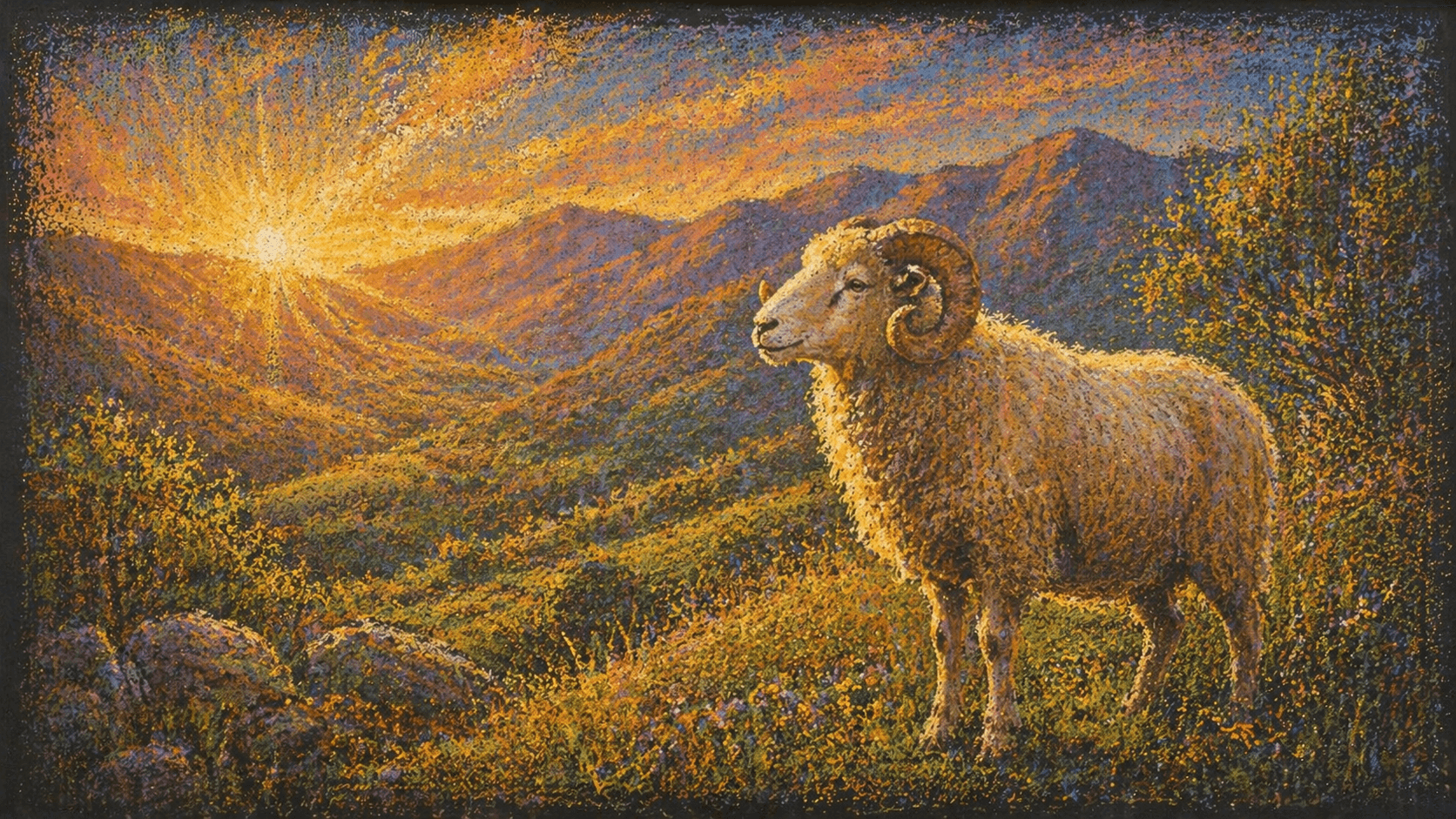
“Ibrahim,” the voice came. “You have shown Me everything I needed to see. Your love. Your trust. Your willingness.” And in place of what Ibrahim feared he would lose, God provided an animal — a ram — to be offered instead.
It was not really about the sacrifice at all. It was about the heart that was willing.
This story is at the center of Eid al-Adha — which means “the festival of sacrifice.” It is the holiest celebration of the Islamic year, falling at the end of the Hajj pilgrimage, when millions of Muslims journey to Mecca to walk in the footsteps of Ibrahim himself.
How people celebrate today:
The day begins with clean clothes — the finest you own. Families walk to the mosque or an open field for Eid prayer, filling the space shoulder to shoulder in the cool morning air.
Then comes the Qurbani — the sacrifice. An animal is given in honor of what Ibrahim offered. The meat is divided into three parts: one for the family, one for friends and neighbors, one for people who are poor and hungry. No one is left out.
Kitchens fill with the smell of slow-cooked meat and spiced rice. Families gather — grandparents, cousins, aunts, uncles — at tables that bend under the weight of the food. Children dart between the adults, already full of dessert, already loud with happiness.
People give gifts. They visit graves of those they have loved and lost. They give money to those in need. They say “Eid Mubarak” — blessed Eid — to everyone they meet.
And somewhere in all of it, the story of Ibrahim moves quietly through the day. Not as something ancient and far away, but as something alive — a question each person carries: What do I love? What would I give? What does it mean to truly trust?
You might see
A greeting to know
Eid Mubarak
EED moo-BAH-rak
“Blessed Eid”