Purim
The Festival of Lots
The topsy-turvy holiday that celebrates a brave queen who saved her people
The feeling at the heart
Courage
The Story
Have you ever had to do something really scary because it was the right thing to do? That feeling — the wobble in your stomach, and the choice to go ahead anyway — that is one of the bravest feelings there is.
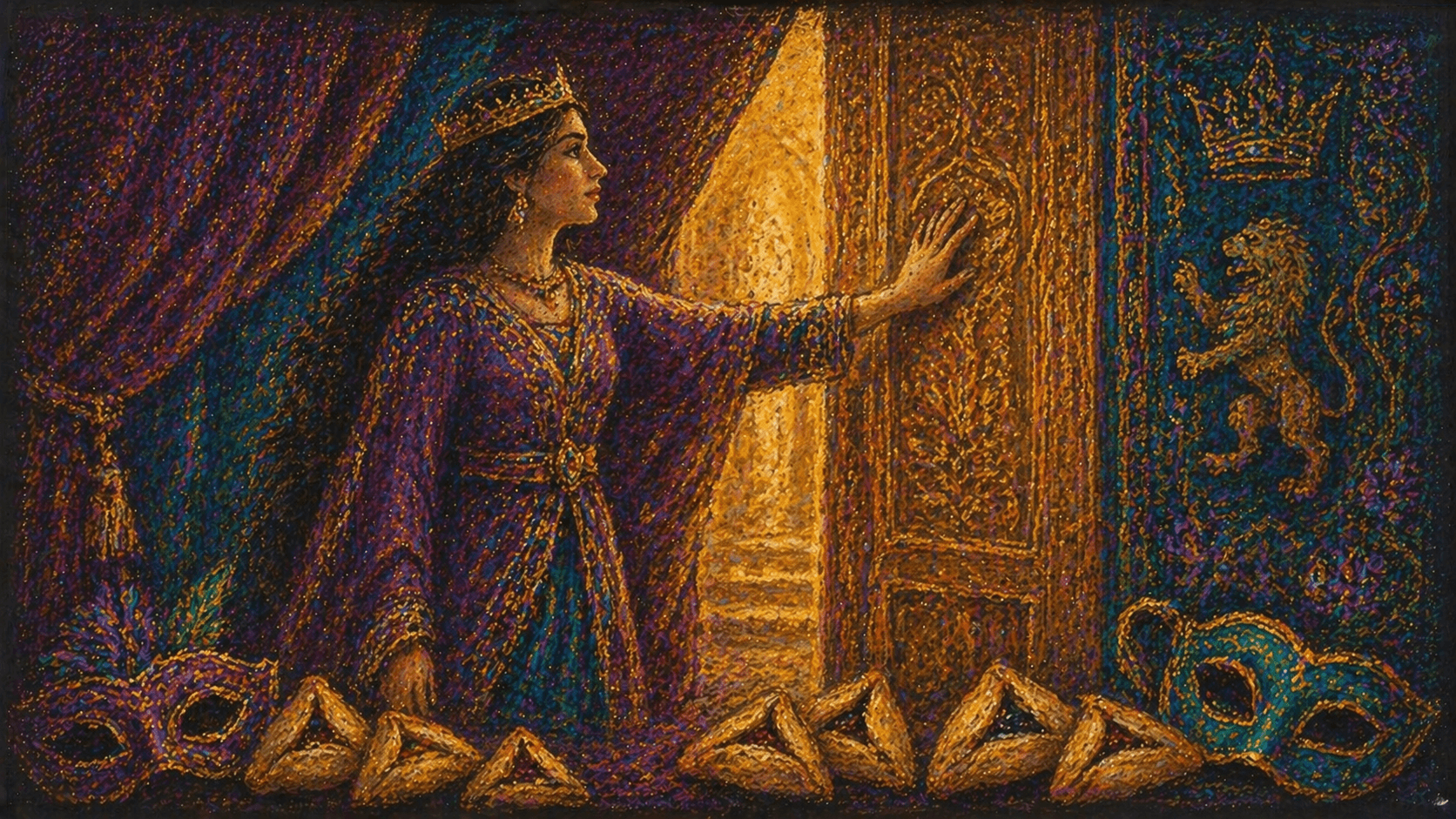
A long, long time ago, in a great kingdom called Persia, a young Jewish woman named Esther was chosen to be queen. The king didn’t know she was Jewish. Almost no one did. Esther kept that part of herself hidden, the way you might keep something precious tucked close to your heart.
But then something terrible started to happen. A powerful man named Haman — one of the king’s closest advisors — decided he hated the Jewish people. He made a plan to hurt all of them, every single one, across the whole kingdom. He even tricked the king into agreeing.
Esther’s uncle Mordecai found out. He sent word to Esther. You have to tell the king the truth, he said. You have to ask him to stop this.
Esther was afraid. To walk into the king’s hall without being invited — that was against the law. Even for the queen. She could be punished.
And Mordecai wrote something back that people still say today: Maybe you were made queen for exactly this moment.
Esther took a breath. She made her choice. She walked in.
She told the king who she really was. She told him about Haman’s plan. The king listened. He believed her. Haman was stopped. The Jewish people were safe.
One person’s courage — wobbly, scared, but real — had changed everything.
How people celebrate today:
Purim is one of the loudest, most joyful days of the whole year. It is a holiday of noise and costumes and sweetness and fun.
People dress up — as queens and kings, as animals, as superheroes, as anything they like. The streets and synagogues fill up with color.
In the synagogue, someone reads the whole story of Esther out loud from a special scroll called the Megillah. And every single time the reader says Haman’s name? The whole room erupts. People shake loud rattles called graggers, stomp their feet, boo and hiss. The noise is so big it swallows the name right up. Children get to be as loud as they want, and that is not just allowed — it is the point.
There are triangle-shaped pastries called hamantaschen — little pockets of dough folded around sweet fillings like jam or chocolate or poppy seeds.
Families put together little gift baskets called mishloach manot — filled with treats and snacks — and bring them to friends and neighbors.
Purim says: be brave, even when your knees are shaking. Tell the truth, even when it’s hard. And then — when the hard part is done — fill the room with noise and sweetness and the people you love.
You might see
A greeting to know
Chag Purim Sameach
KHAG POO-rim sah-MEH-akh
“Happy Purim”